20 STORIES FOR 20 YEARS
Evelyn Raymond
Bethel Woods’ longest-serving volunteer, Evelyn Raymond, is a retired special education teacher, formerly of Sullivan County BOCES. She and her husband, Dennis Raymond, were the first two volunteers at Bethel Woods.
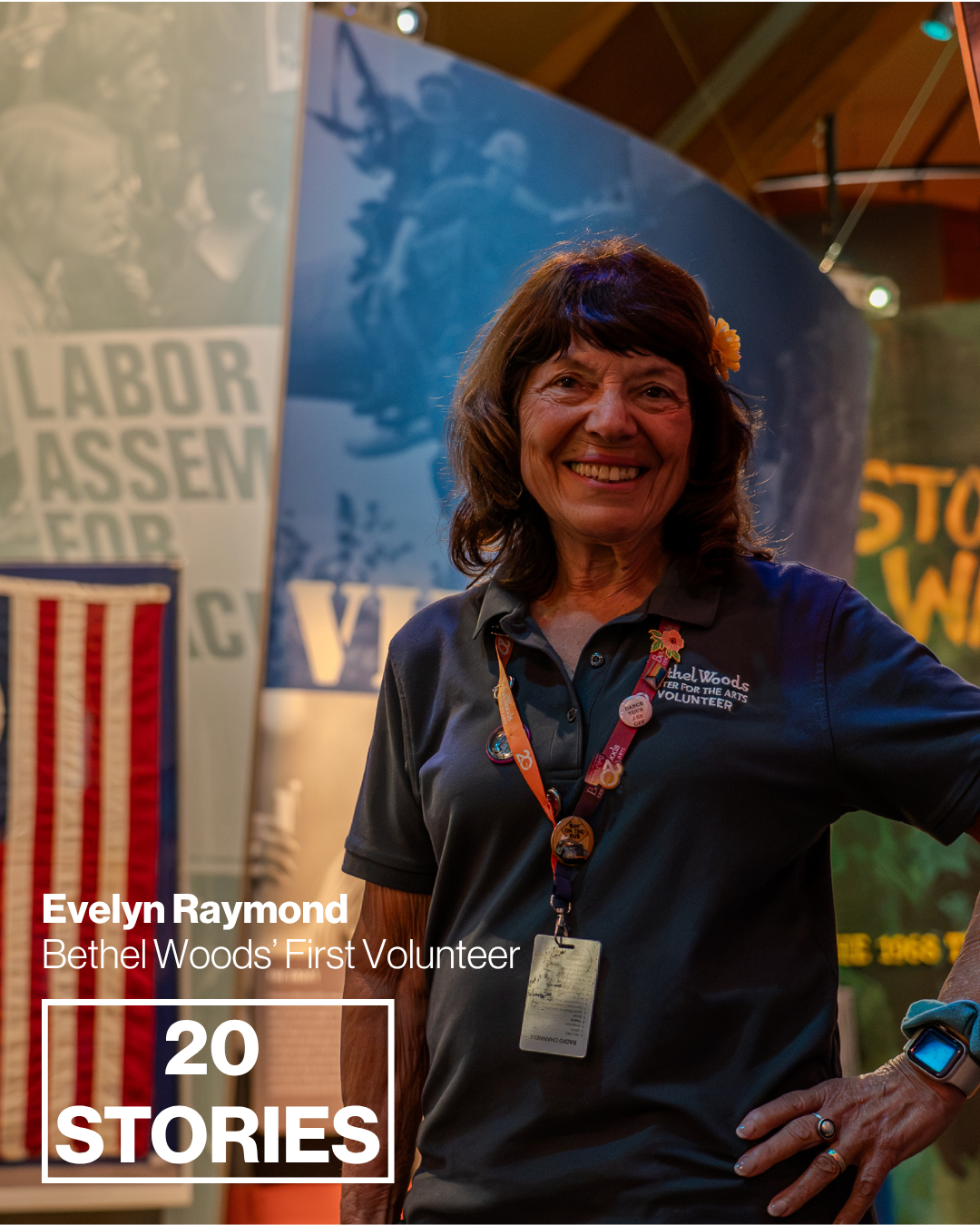 “I was living in Greenwich Village as a student at NYU in 1969, and my neighbor came by and asked, ‘Do you want to go upstate to a concert?’ And I said, ‘Sure.’ And I actually went to the record store and bought tickets. I always felt so great that I had been able to attend Woodstock. It was just something really special to have been there.
So when they had different reunions, you know, 15, 25, we came to those with our kids. When Bethel Woods was being created, my girlfriend Angela had worked for Alan Gerry at Cablevision, and so I asked her, ‘Would you see if they want volunteers?’ 'Cause my husband Dennis and I thought that would be fun to do.
So Angela asked them, and they hadn't even thought about having volunteers. That ended up being a spark. There was gonna just be employees, and that would be it.
So we were interviewed by a panel of people at Cablevision, and we talked about the whole idea and why we were excited about it. And they said, ‘OK, we'll try you out.’
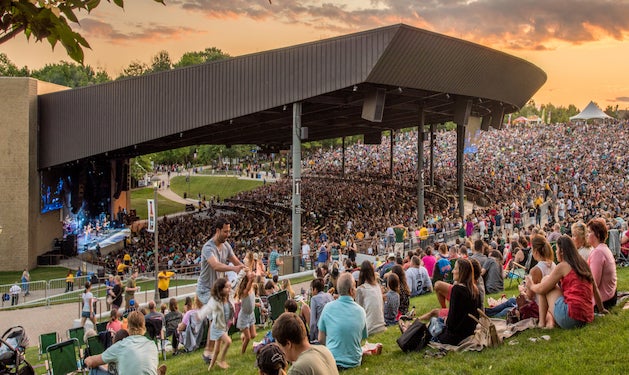
So it was really exciting in 2006, when it opened, they had the New York Philharmonic, and everybody got dressed up. I still remember that night of welcoming the guests, and being treated just like the employees, or like the management team. Some people asked, ‘Where was the original Woodstock stage?’ So we would show how to view it and how to get down there to walk.
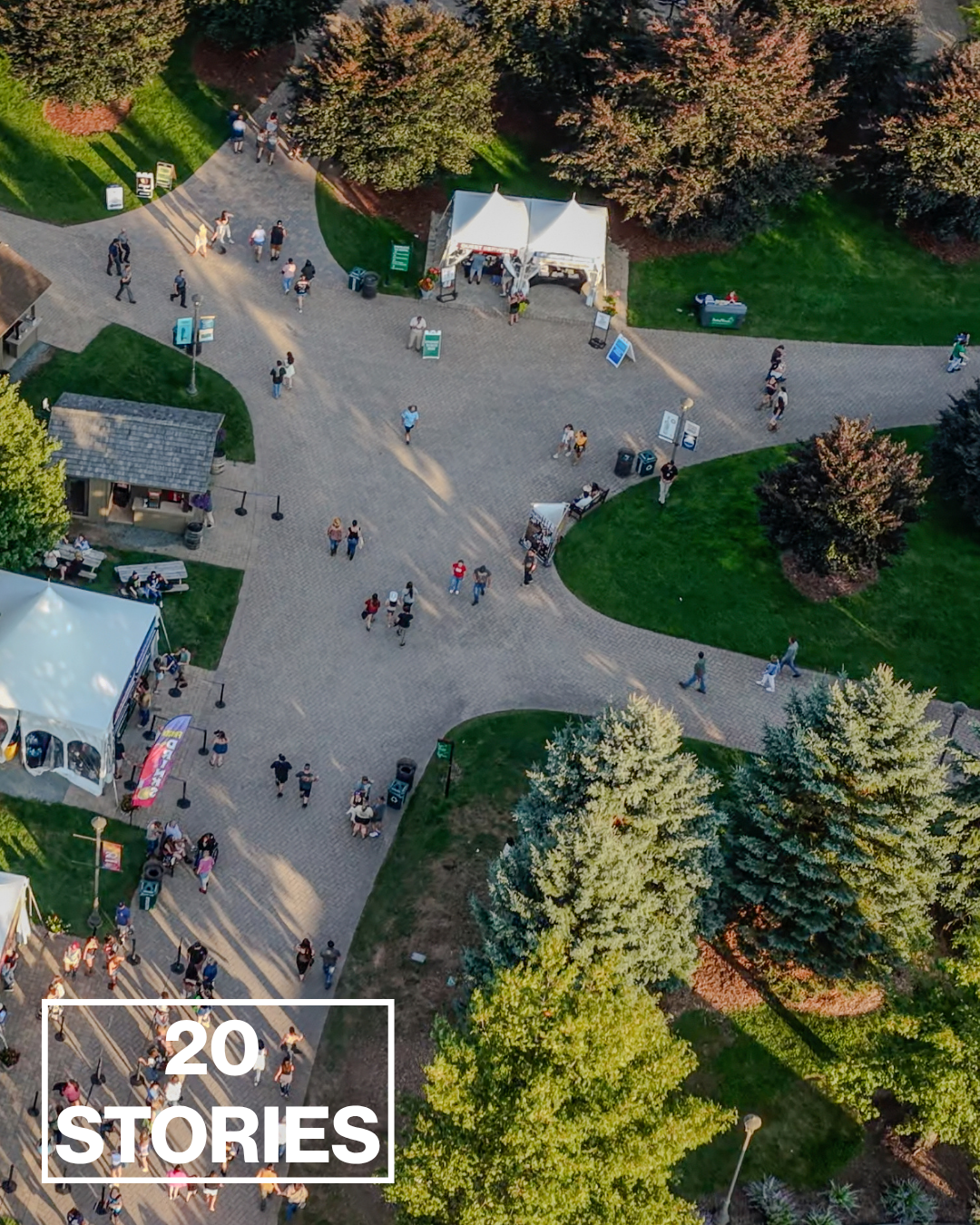 And after that, we kept volunteering the whole rest of the concert season. We always wanted to greet almost everybody that came, we were always at the Y, where the walkways separate. So it worked out, and the next year, there was a director of volunteers, Susan Goodrids, and there were about 50 people that volunteered. I think there are over 300 volunteers now.
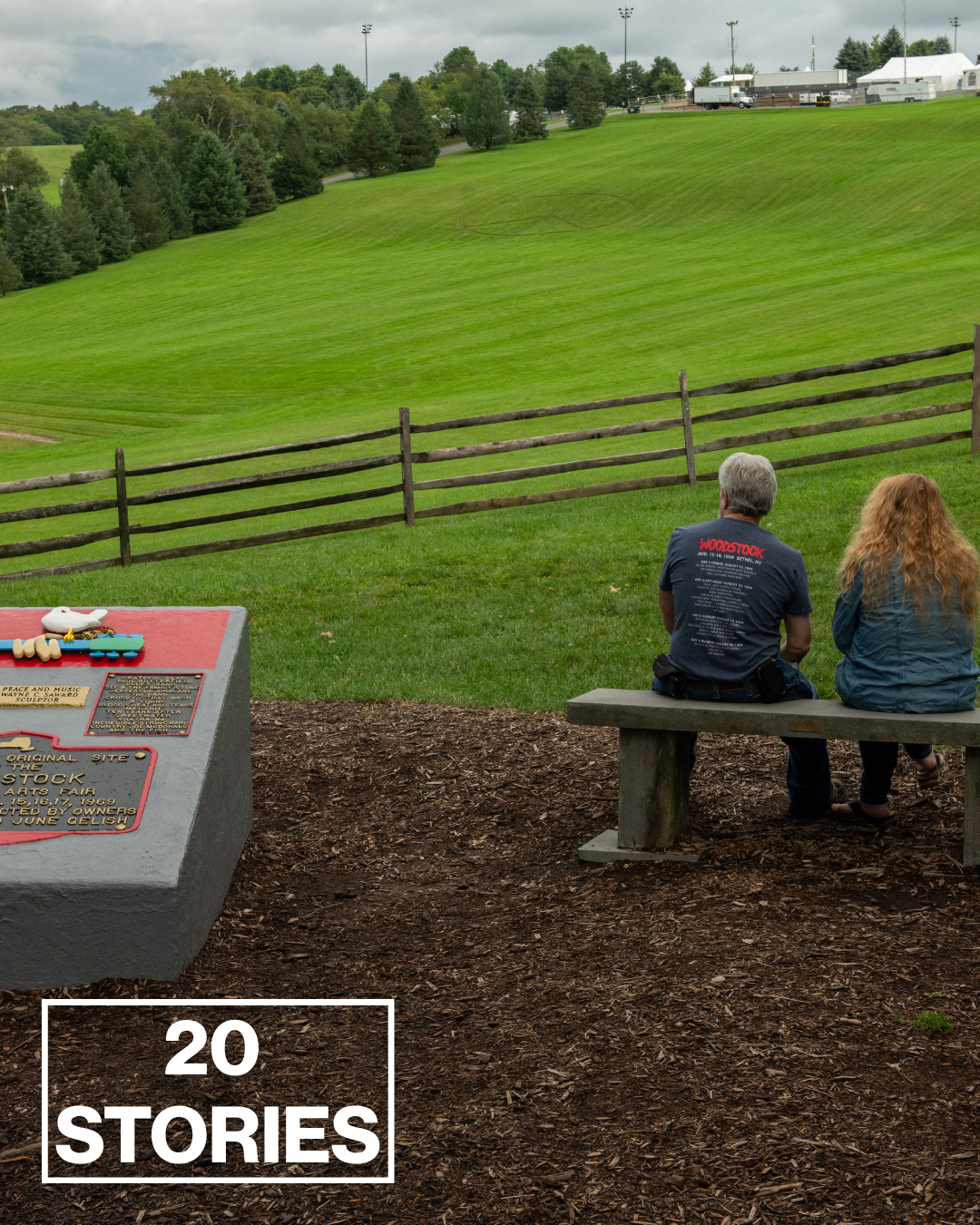
Dennis passed away in 2020. So I have a bench now near the monument with his name, and I feel so good about that. Because this is a happy place and a meaningful place, too. It really changed history.
It changed the way people think and still do, right? People are amazed that any of this could have happened in the first place when they come here to the museum.
 And it can happen outside, not just in one little field. It can be the way we treat people, and the way you think. There's a Woodstock way of thinking, which is very creative and very helpful. No matter what is happening in the other world, “the real world.”
To me, this is real.
Mostly I volunteer in the museum and do events with children, like Kidstock. I don't do the concerts anymore, unless I go to them. 'Cause I am 82, even though you might not think it, right? I don't like to be out late, but I do love to be in the museum and meet people from all over the world. I always ask them where they're from, and I always meet people that have been to Woodstock or have a friend that's been here, and I'm always giving out the little cards to tell your story.
I liked when I met Carlos Santana. They kind of closed the museum, but I happened to be here for the time when he was here, and he was gracious and wonderful, and loving it. But something good happens every time. It sparks something in me all the time.
One really good experience was when the museum had a sensory-friendly day, and I volunteered for that and I thought it was great. They took anything that could be distracting in a negative way, sounds and even the lights and made sure it was good for them.
The museum’s '68 Theater is so vivid that I can't go in there. Because if you live through the '60s and you do that, you're just gonna get wiped out every time. There are two assassinations... But I always tell people to go in there. That display is the '60s. That is the '60s.
 You know, volunteers do things for the love of it. They don't do it for the money. I used to think to myself that when I was teaching, I would teach as if I was a volunteer. So that I would have that same attitude.
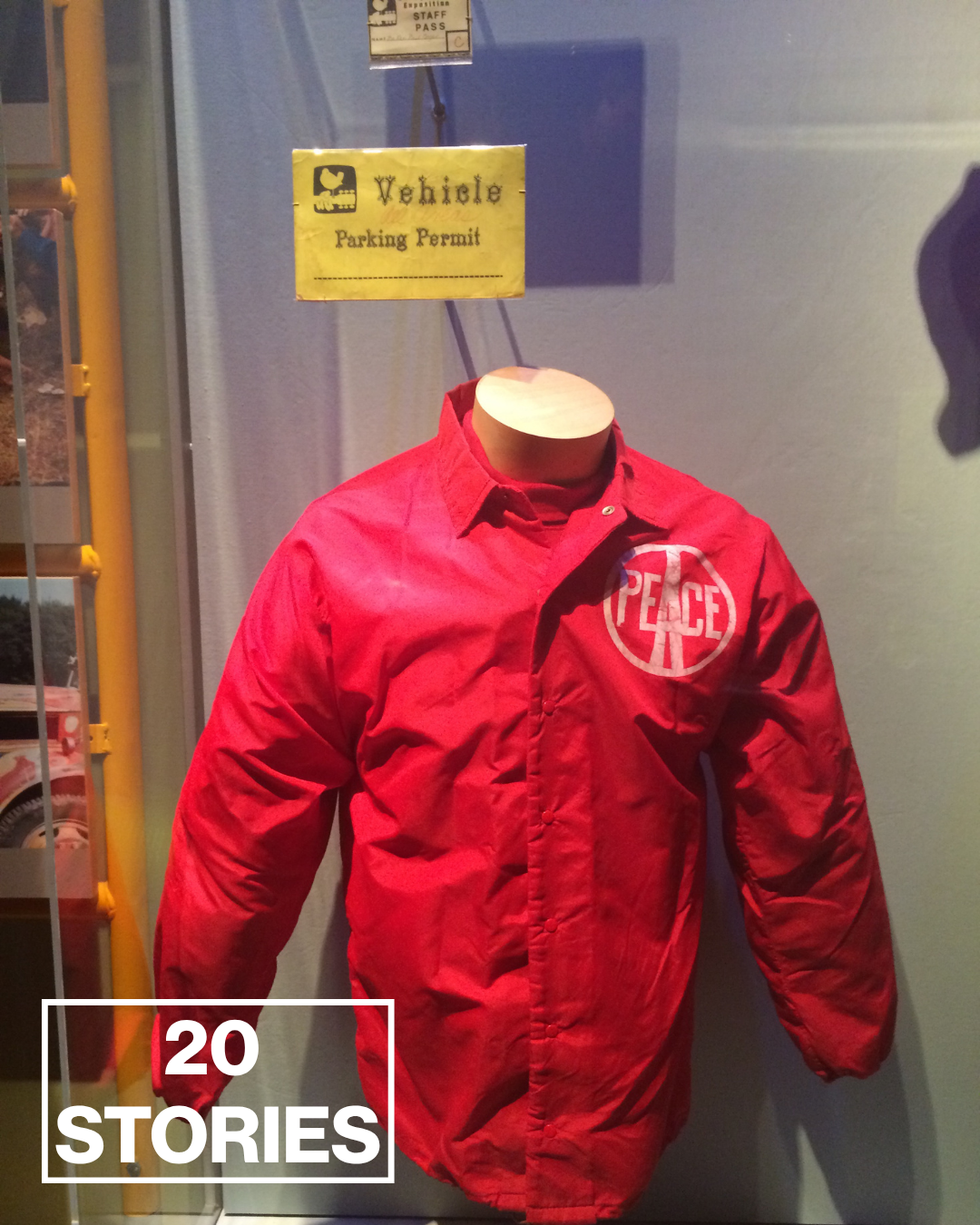
My granddaughter in Japan asked me, ‘What was such a big deal about a concert? Why was that so important?’ And... I tried to explain to her that it wasn't the concert that was important. It was the way that the people acted, because there was a lot of disasters happening. It was raining. It was muddy. There was no food, no way to get in and out. And everybody helped everybody. And did it with this new, wonderful music in the background. I told her about the Peace Force. And then she understood. She went like that [makes a peace sign] and [makes heart hands] to her heart. I said, ‘That's it, Glo. Yeah.’
I wonder when we're all gone, there's nobody left that has been to Woodstock, or knew about Woodstock, or even knew about Bethel Woods. How will they still get that sense of... peace and love. Maybe they'll have to find it another way. But we are about that, and it still exists here. Yes. And very strongly.”