20 STORIES FOR 20 YEARS
Josh Cunningham
Joshua Cunningham is the Grounds Superintendent for Bethel Woods.
“I didn’t have much connection to the Woodstock site before Bethel Woods, but my family has been here for generations. On my dad's side of the family, his aunt and uncle are the Vassmers of the general store in Kauneonga Lake, and they were always big into the Woodstock thing...and then on my mom's side, my grandfather was the fire chief for White Lake in 1969 during the event, so there were some stories about delivering food and water to all the guests that were stranded here.
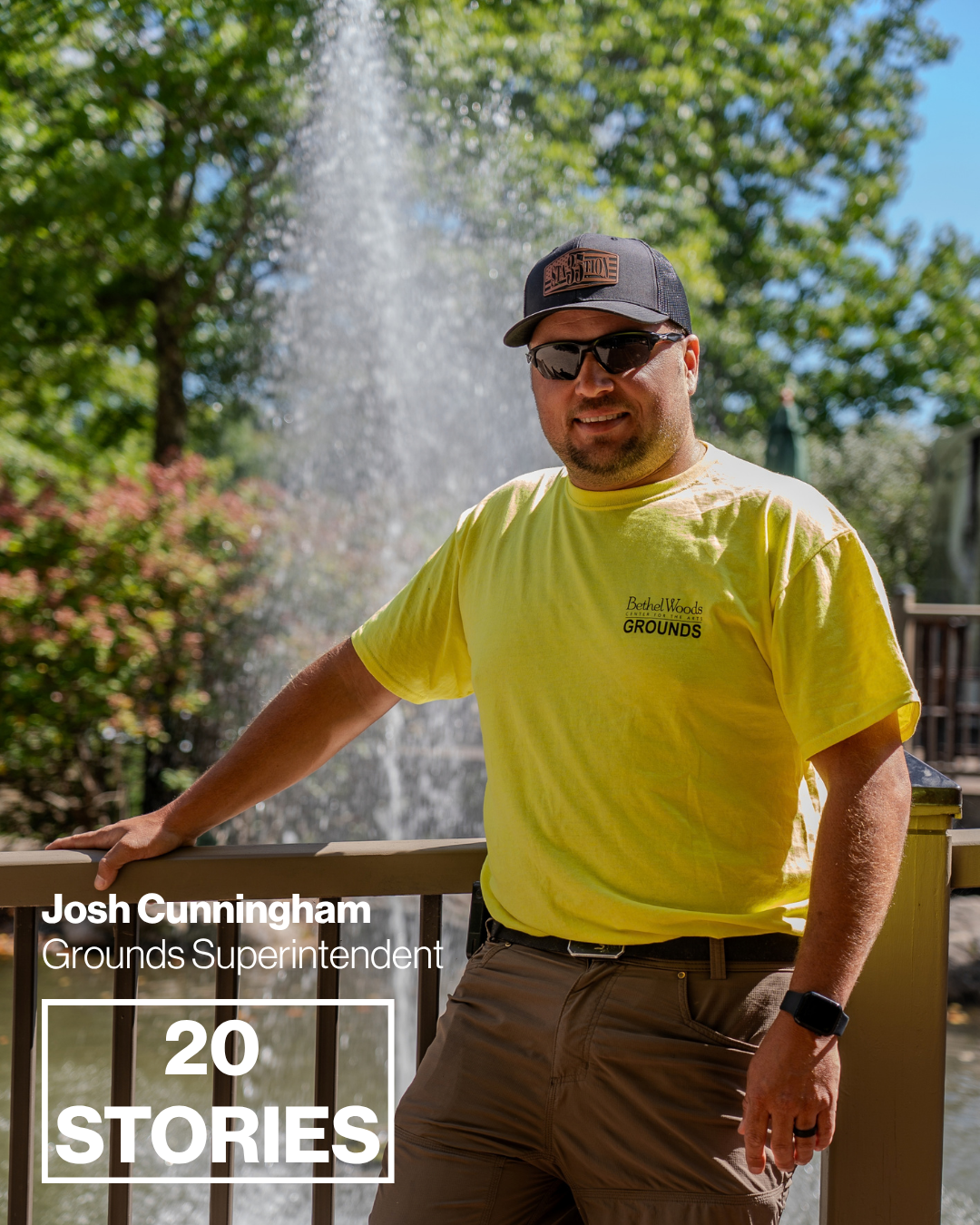 I started working at Bethel Woods in housekeeping when I was 16, in June right before we opened. I was in high school and it was my first job on the books. I was cleaning the pavilion and getting the site ready for the opening night. I originally applied for grounds, but at the time you had to be 18 to work for grounds. I started with my twin brother, and we both came back in 2007 as supervisors for housekeeping.
One of the things that I remember the most from my housekeeping days is how far smoking has come. When I was in my first year, we spent at least two days after every concert picking up cigarette butts. In the hot sun sucking up cigarette butts, that smell never goes away. We used to have a machine that sucked up cigarette butts off the blacktop, like behind the pavilion, from all the stage hands and staff. There were always cigarette butts everywhere. And now you hardly see any, with the way things have changed with smoking and tobacco, everybody knows about it.
Then the following year, when I turned 18, I made the move to grounds as a foreman in 2008 and started full time. I was responsible for the daily operations of mowing and mulching and maintaining the site to the Alan Gerry standard, so it was always pristine.
‘Alan Gerry standard’ is everything is triple-checked, make sure there's no weeds, things are edged. If you're gonna change something, it needs to have a report. It used to be like, if you wanted to change the style of mulch, you had to explain why and make a report. And if you're going to do one, you have to do all of them, so everything was uniform: the height of the grass, the lines on the grass, no clippings... You know, very detail-oriented.
Obviously back then we had a lot less to focus on. We were just a concert venue, so we had a lot more time to really detail and make sure our site was top notch every single day. Our job was constantly: when you finish, start over.
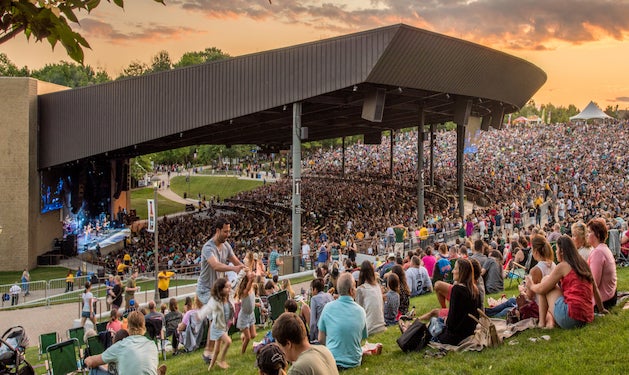
Our sitting lawn at the main stage, during the season, we keep it down about 2.5 inches. So it's shorter, it's easier to maintain and bring back after it gets matted down. But the rest is usually around 3.5 inches. Keeps a little more fluffy, a little less enticing to walk on.
Three times a year, we have a company aerate the sitting lawn, they have this big aerator in the back of a tractor and it pokes holes in it. It helps bring air into the soil to help the roots grow deeper, stronger, so it can handle the traffic. It also brings moisture in so that the water doesn't run completely off down the slope.
We spread sand on top and it's built up an organic layer that keeps it from getting completely dead to the roots. The grass stays alive in that well-drained sandy soil so that it'll rebound a lot faster.
That technique began about 10 years ago, before I took over in 2019 as grounds manager. I was the one that always mowed that lawn and kept that lawn, fertilized it, aerated it. So I took a lot of pride in making sure that lawn was ready for concerts.
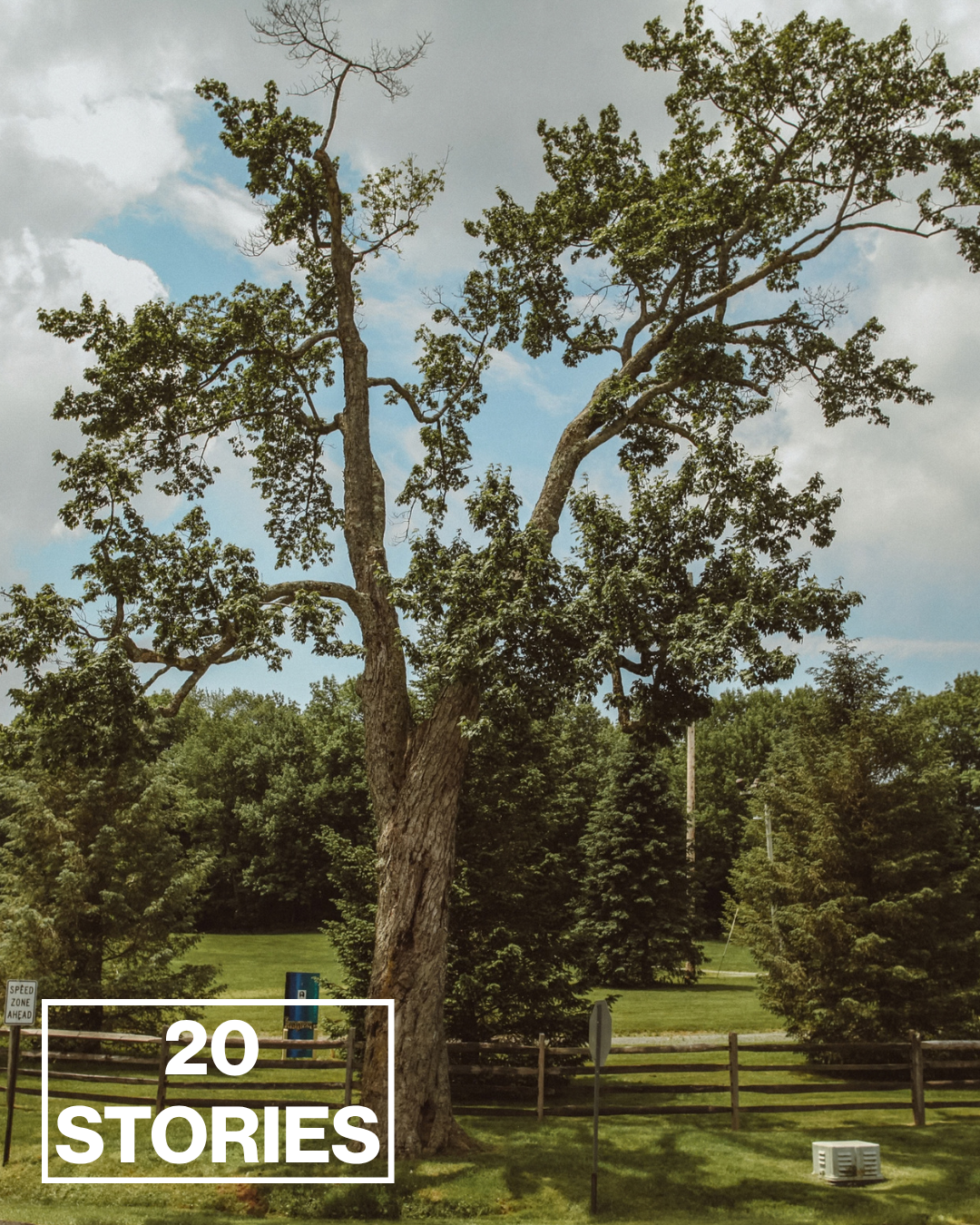 We do a maintenance plan of the trees every year. We measure them and do a diagnosis of every tree. Taking down the Message Tree was definitely something that was seen coming for years before I even was in charge. We knew that it was declining for many years, and we tried making clones or offsprings of this plant. I used to be standing up there with a bucket truck and take clippings, and we had a guy that had a greenhouse that took on the project, and he was trying to make clones and make us future message trees, but the tree was so old, and declining that it was very hard to even get live wood enough to do that.
We actually had cables in it to keep it from falling apart. We brought in different people to help aerate the ground and fertilize it and try to keep it alive as long as
possible. So it was definitely a tree that in most people's yards would have come down much sooner. But we kept it going for another 5 to 10 years on top of what it probably should have done, but then it just declined very rapidly. Pieces were dropping every time there was a storm. We still have the trunk standing there, and everything that's left from the tree is still in storage.
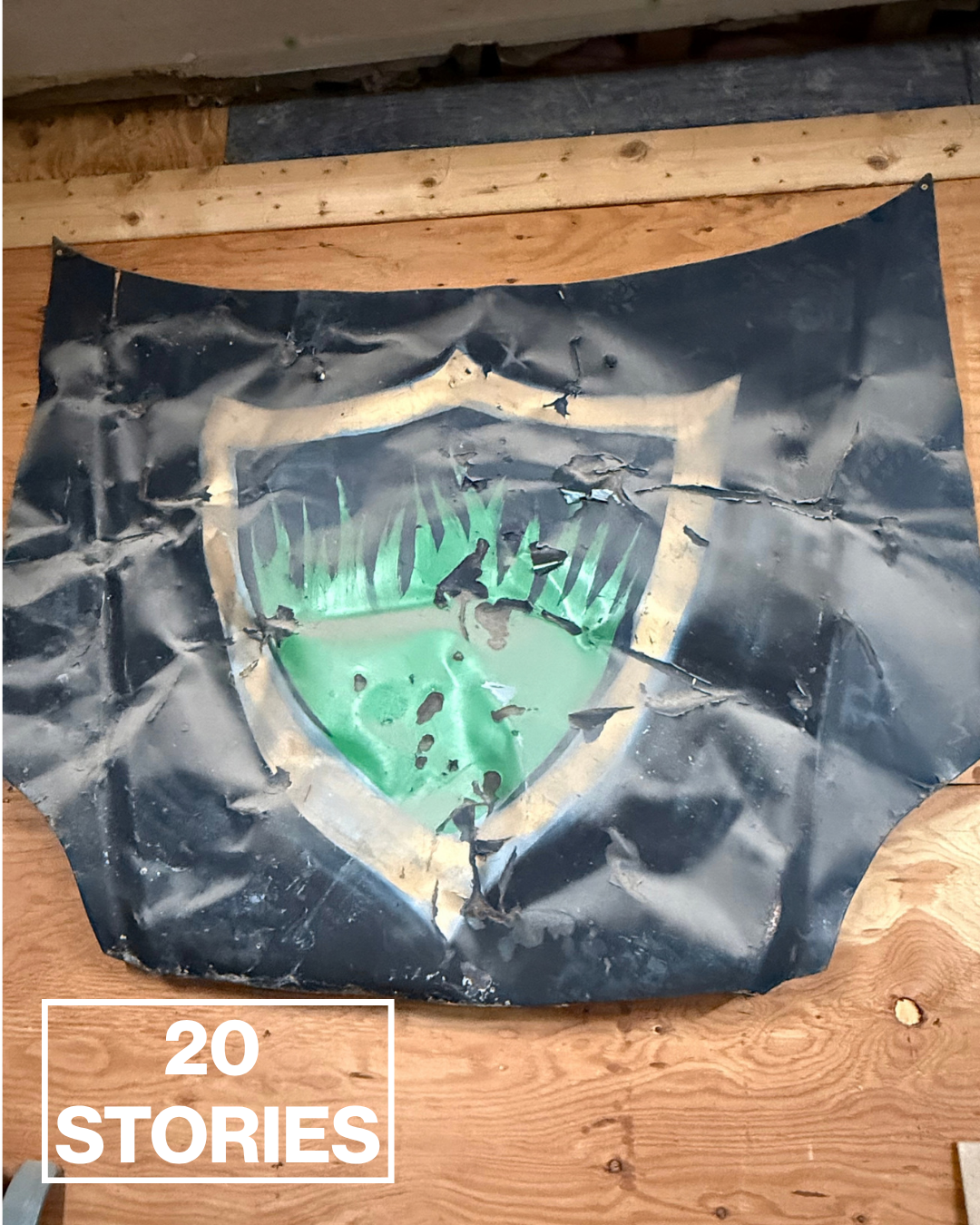
One of my coolest experiences was Mysteryland. It was a big EDM festival. At the time, we never really had anything like that here, so it was all new. And this company came in with a very large amount of people and a lot of moving parts. And they didn't really need much from us other than getting in our way from our normal operations. But the part that stuck out to me was they had people that they called the grass police. And they would make sure that if you didn't have to be on the lawn, you weren't allowed on the lawn. And I still reference that when I try to keep our staff and our volunteers and our vendors off the grass as much as possible. They're always like, ‘Why are you so worried about the grass?’ I'd say, ‘It's not just me. We try to keep the place looking as clean as possible, and as nice as possible, and the less we have to repair in between shows, the better the experience for the next person will be.’ Mysteryland had an old car that said “Grass Police,” and they gave me one of the hoods off the car that hangs in our grounds shop.
 Another change I’ve seen is money. My crew, we're responsible after shows for picking parking lot garbage after the shows are over. There used to be people that said, ‘I'm going to be the first one. I want to pick the garbage’ because people used to spend cash back then, and when people were walking home or at night, get back to their cars, having had a few drinks, people tend to drop money. So they used to find money when we picked the pavilion lawn, and
there was always change because they're sitting on the ground, when people sit down, their change falls out of their pockets. We had a guy in housekeeping who used to say, ‘That's my lawn, don't touch it. I'm going to clean it all day.’ And he would pick up all the time. He was an old guy and he would take the change and use it towards vacations. So that's changed a lot because everything now is cashless, everything's on cards, so you don't find money anymore.
We used to find a lot of camp chairs...some people are pretty wasteful. They'll buy a grill and use it and then leave it. And during festivals, some people would come and camp and they'd go and buy a tent and tarps, and then when they leave, they just left them on the ground.
You know, as far as the Woodstock thing, the mud actually helped us over the years, because we've created new walkways to deal with it. It's definitely helped us improve the site and improve the functionality from parking lots to our walkways on our lawns. We never used to have walkways on the lawn, and then we finally developed aisles since it kept getting muddy, we had to designate walkways there. We've learned over the first couple years that there were certain paths that always got beat down because there was a pole blocking center stage. People didn't tend to sit there, so they walked in that spot. So that's what kind of gave us the idea of where to put the paths: the people. There's a lot of new paths from year one till year twenty.
Some of my favorite parts of the landscape are water features. Most people don't see a lot of them. We actually just renovated our lower pond by our house concession this spring and our whole stream bed to revitalize it, and we're currently redoing another one.
We've been working on the Founder’s Way garden, and when people go up to the museum, they can walk on the site to take a look at that. One of my other areas that I really like now is a dedicated pollinator garden on the end of the festival plaza, by the bathroom areas right next to the first aid room. We've put a lot of love in the last couple of years and added a lot of plants that flourish all year long. So we have some tulips in the spring, black-eyed susans right now and hydrangeas, and it's really pretty all year long when you come into the concert.
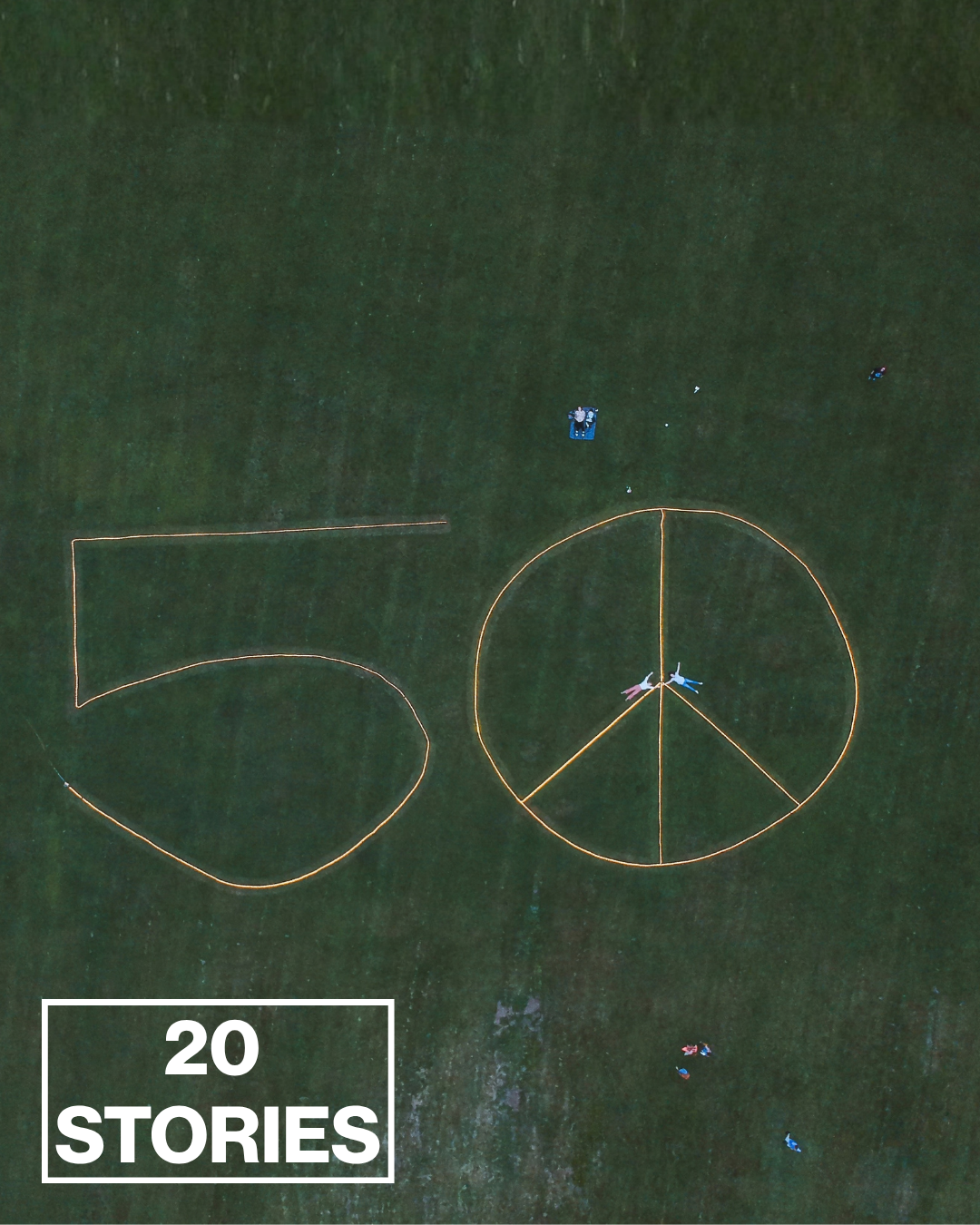 One thing that I take care of personally, since taking over in 2019, is the
peace sign on the main field, I push-mow that. There's been talk about possibly redesigning that. Some people were pushing for me to plant flowers in it, maybe wildflowers and make a design. I keep telling them, I can try it. But the deer... I can't keep them alive because the deer are always out on that field.
During the 50th anniversary. I actually mowed a 5 in the lawn next to it for the anniversary weekend and then they put lights on it and lit it up at the 50th with a peace sign. But it was very challenging to get another number because the slope out there, it's not straight up and down or flat. It's like a very curved hill.
The best part is to see the finished results of what we do and then looking at all the results from all the surveys, saying most people come here because of the Woodstock site and the beauty of the site. In the heart of it when we're stressed out and stuff, you don't realize that until you sit back and look at it.
I just feel pretty fortunate to work in a place that I grew up. When I was a kid, my grandma and I used to drive around and look at the fields when it used to be the harvest festival, before Bethel Woods even opened. But it's nice to work at a place like this at home. I'm pretty lucky.”